Difficulty is often one of the most discussed aspects in videogames. Many times have I heard perfectly good (or perfectly mediocre) games being bashed for being too easy, or others being praised first and foremost for being unforgivingly hard. This has always somehow baffled me: I've always considered difficulty to be a secondary aspect of a videogaming experience, that only ever truly rises to prominence when it becomes too much. Still, it is undeniable that, when done well, difficulty can convey a variety of narrative needs, can be one of the main sources of fun, and can stimulate a sense of competitive strive towards perfection that is not too different from that of sports; however, it's very easy for difficulty to be done badly in many different ways, thereby becoming the source of a frustration that should have no place in an entertainment medium.
No game can afford being more frustration than fun: an easy game may get mocked, but it will be completed, thus allowing its qualities to connect and eventually compensate for its low difficulty; a hard game will simply get abandoned, and thus any other quality it may have had will be lost under a cloud of unpleasant memories. Besides, a 2014 study by the University of Rochester theorises that frustration over a game's difficulty may cause an increase in aggressive behaviour, especially when players feel their defeat was due to circumstances out of their control. So I decided to compile a very personal list of design decisions or challenge types that I believe fall in the category of "bad difficulty": the kind that seems to test more your patience, your memory, and the amount of free time you have, rather than your skill.
Just to be clear, even these things aren't always bad, and can sometimes be justified or even praiseworthy in the context of a particular game in order to serve and inhance its narrative needs. Secondly, it's important to remember that bad difficulty does not necessarily equal a bad game, especially when not consistently present throughout. Also note
that I'm leaving out all the cases in which bad
difficulty is caused by faulty programming or flaws in the interface
between game and player, like problems with the camera (the well-known
"leap of faith gameplay", for example) or with the controls (for
example, how in Mirror's Edge the button for running on walls is the
same button used for jumping, which results in a long series of
humiliating deaths). These are frustrating flaws in a game, but in this
article I wanted to focus on conscious design decisions rather than problems that could come from
unintentional mistakes or simple
oversights.
Trial and error
When the only way to know how to deal with a threat, or to even know that a threat is there in the first place, is to die to it a few times. Ideally, it should be possible to pass every challenge on the first try, with the right amount of skill and perception: there should be cues to let the player deduce the presence and the nature of a threat, enough information and tools to let them figure out a way to deal with it, and/or enough time to react to it. Most of the time they won't be able to, of course, but it will be because the game has outskilled rather than cheated them. Having the player walk on apparently safe terrain only to kill them with an unavoidable trap is one of the worst things a game can do; not only is it not a test of skill as much as patience, memory, and luck (and let's face it, a game in which all you have to do is memorise and execute is basically a glorified Simon Says, isn't it?), but it also reduces immersion and narrative impact: it means that in-story, the characters could never realistically have survived their adventure without the divine foreknowledge bestowed upon them by some external presence.
When choices, exploration, or puzzles are involved, this also applies to having a sensible relationship between cause and effect: e.g., the players can't be expected to think that rescuing a child will cause a whole orphanage to burn down, and thus they cannot be punished for it; a player cannot be expected to check every single solitary brick in a huge castle, and thus a secret cannot be hidden without a clue behind a brick that looks like any other. Any game with any kind of narrative focus should, in my opinion, avoid trial-and-error gameplay like the plague.
Exceptions: a game like Long Live the Queen relies heavily on trial-and-error, but does a good job in making each "error" feel not like a failure, but merely like one of the many possible outcomes the story can have. Something as simple as an achievement for discovering all the 11 ways the protagonist can die helps greatly in this regard. In Hotline Miami, the lack of a narrative focus, the general atmosphere of blind desperation, and the fact that you can hit "retry" and be back in action before your body even hits the ground make the luck-based and T&E-based gameplay feel not only tolerable, but even essential to the sense of trance the game wants to convey.
Lack (or removal) of checkpoints
Videogames that are dependant on checkpoints need to be reasonable in their placement. Far too many times I've seen games thinking that reducing checkpoints is an effective way of ramping up the difficulty from "medium" to "hard": in reality, it doesn't make the game harder, it only makes it more frustrating and boring, by testing the patience (and luck) of a player who's already proven they're able to pass a certain section. Sending the player back to the start of the whole level or even the whole game is an obsolete concept, that has no place in a world where players aren't supposed to shell out a quarter at the arcade after every game over screen.
Needless to say, this argument has no reason to exist in games which allow the player to load and save at will: if you screw up and lose two hours of progress, it's your own damn fault.
Examples: the "Grounded" difficulty level in The Last of Us.
Examples: the "Grounded" difficulty level in The Last of Us.
Undodgeable one-hit-kill attacks
Bosses or enemies with one-hit kill attacks are interesting challenges, as long as the player is able to understand that they are coming and has enough time to react. If they can't be dodged or blocked, or can be chained to another attack that prevents the player from dodging or blocking, they become the reason why many controllers get thrown through expensive LCD screens. Not only is this the cheapest way to make a fight feel difficult without actually making it difficult, it also throws any sense of being challenged fairly out the window, as it becomes basically a game of dice: the player just throws as many tries at the boss as it takes until the game just so happens to decide not to use the lethal combo. And even when winning, the player knows it's been nothing but luck, as they know that all the boss had to do was use that one attack to vanify any prowess they may have displayed against them. In fighting games in particular, this is nothing short of unforgivable.
Examples: the final boss of Tekken 5 is well known for his undodgeable stun, which can be chained to a one-hit-kill projectile attack. Sometimes, should the player sidestep such attack, he would randomly shoot another one, which would then become undodgeable. Also, Azazel in Tekken 6 and Justice in Guilty Gear.
Exceptions: in many JRPGs games (Dragon Quest VIII comes to mind), insta-kill moves by bosses are acceptable due to the simple fact that other characters have the abilities or the items to resurrect fallen allies, thus creating counterplay to those moves.
Exceptions: in many JRPGs games (Dragon Quest VIII comes to mind), insta-kill moves by bosses are acceptable due to the simple fact that other characters have the abilities or the items to resurrect fallen allies, thus creating counterplay to those moves.
Cheating AI
You don't play a game of chess in which only one player can move the king and the bishops like a queen. This is when the enemy AI does not abide in some way to the same rules to which the player is subjected. It's the most typical definition of "fake difficulty", and it's absolutely unforgivable in 1v1 fighting games. For example: the AI reacting to the player's input instead of the player character's actions, enemies being able to block attacks that would be unblockable to the player, opposing factions being able to see the whole map despite the presence of fog of war, enemies never running out of mana/pp/energy and/or having no cooldown, shooting through walls or barriers while the player cannot, skewing the random number generation (like the critical strike chance) to the player's disadvantage, etc. It makes the player feel like they have to play AGAINST the game and its rules, instead of WITH the game, it destroys narrative immersion, and it makes for, quite simply, an unfair challenge. While not nearly as borderline criminal as it was the day of "quarter muncher" arcades, it's still a terribly frustrating and incompetent way of designing a game.
Examples: the very first Mortal Kombat had a notoriously cheating AI, which was able to throw an uppercut without first crouching (as the player had to instead), and which even anticipated Scorpion's side-swapping special move by, for example, shooting Sub-zero's projectile towards the left side of the screen before Scorpion had even left the right side.
Poor explanation of rules and objectives
You don't play a game of chess without telling your opponent that the knight can only move in L patterns, and you don't get halfway through a game of chess before realising that you were supposed to be trying to checkmate the king. It is important, for the game not to feel unfair and frustrating, that the player has the objectives and rules clear: having them running around trying to understand where they're supposed to be going or even what they're supposed to be doing is the quickest way to make them remember the game with irritation. Taking a look online at walkthroughs or community help should be a rare occurence for when the player gives up on the challenge, not something for the designers to expect or God forbid even encourage. Failing a boss thirty times before realising that a move that had been hidden from the player could have saved them twenty tries is basically a one-way ticket to Outthewindowville for the cartrdige/CD/DVD/handheld console/controller, actively encouraging players to find out what objective they're supposed to be pursuing by searching online for the advice of someone who might have stumbled on it by T&E (i.e. pure luck) is pretty close to the nadir of all bad ideas, and in my opinion a fighting game with no in-game movelist isn't even worth the dignity of recognition. Once again, it's merely a test of patience and luck.
Limited lives
Related to the "lack of checkpoint" case, this is another example of difficulty that used to make sense back in the day when games were in cartridges so small that they had no other way to pad out their content, or when the only way for them to make money was to rob players of coin after coin, but it has since rightfully fallen into obsolescence. It can still be tolerable if the punishment for losing all lives is mild, or if it is mitigated in some other way (e.g. the game is very short and can reasonably be completed in, say, half an hour), but the old "Nintendo hard" system should have no place in a time in which many gamers struggle to find an hour or two a day to dedicate to their hobby. Expecting players to start over the game after every failure or to beat it all in one sitting may have been reasonable when gamers were mostly pre-pubescents or teenagers with no money and a lot of time on their hands, or when games weren't as common and numerous as they are today, but in a time in which buying and downloading a new game for under 5€ is one alt-tab away from me even as I'm typing this, there's a limit to how much you can test the player's patience. To quote Yahtzee: «no game these days has any excuse for having a lives system, because I place a clear distinction between a game that supplies an enjoyable meaty challenge, and one that merely fucks the player about».
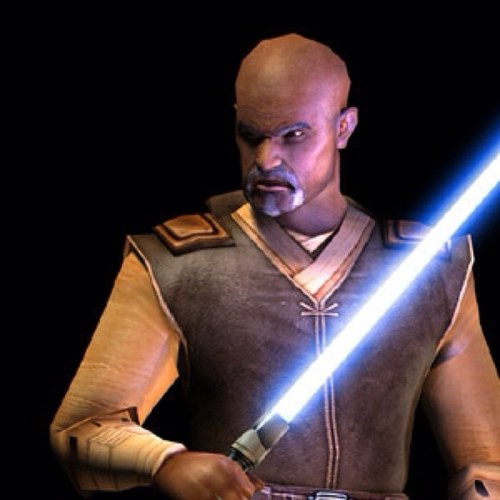
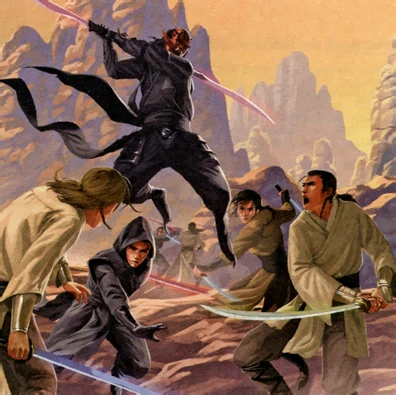
Examples: the limited continues on the first Mortal Kombat, and the limited lives in Star Wars: Dark Forces. The latter, in particular, came out in a time in which limited lives systems were already obsolete.
Over-reliance on luck
There's always a risk in putting parts of a game's challenge in the hands of a random number generator. Up to a certain amount, it's reasonable, as it adds an exciting element of unpredictability not unlike that of tabletop RPGs. But, like everything else, it can be overdone. For example, when it overrides strategy, or when an unlucky roll can make a situation basically impossible to win, or when information or items that are crucial for progressing are hid behind a wall of randomness (e.g. random drops). Many games let player choice influence the RNG in some way (the basic example being an item with +20% critical strike chance, or the shooter's stance and distance from the target influencing the probability of hitting), or they give enough room for recovering after an unlucky roll, and most of the time this is enough. But even then, there's a certain line of common sense that should be respected. Have some sort of "sensible limit" that overrides the RNG: some shots cannot reasonably miss, crucial items do not drop at unreasonably low rates, don't make critical hits so powerful that they can turn the tide of a battle and one-shot opponents (I'm looking at your bloody frying pans, Team Fortress 2). Otherwise, over-reliance on luck can make every defeat AND every victory feel unjust and undeserved, and belittles the role of skills in the challenge, basically turning it into a game of dice with fancy graphics in which save scumming rightfully becomes a necessity.
Examples: in the (otherwise excellent) X-Com: UFO Defense, it is perfectly possible for one of your soldiers to sneak right up to an alien's back, one tile away from them, empty a whole magazine's worth of rapid shots, and miss every single one of them. It is also perfectly possible, if the dice REALLY hate you, for the weakest of the alien foot soldiers to survive a direct hit from a rocket, while your brand new armoured tank gets destroyed by one shot from that same foot soldier's PISTOL. In the very first Fallout, it is perfectly possible for a lucky critical hit, from an enemy whose hits the player character barely registered up to that point, to do damage equal to twice your whole max health. In the (perfectly mediocre) Sanctum, survival mode, the enemies which make up each wave are chosen randomly, and facing the wrong kind of monster during the first two-three waves (i.e. before you've had the resources to build your defenses and power up your weapons) can easily make the game unwinnable beyond any possible strategy. In Terraria, some items have such unreasonably low drop or spawn rates that one wonders why to even put them in the game.
In conclusion, it all comes down to a few principles that wrap up all the cases I addressed:
1) The challenge should come from applying the rules, not from trying to figure out what the rules are.
When failing, the ideal reaction should be «Damn, I messed up» or «Hm, so what if I try this instead?», not «What the hell just happened?» or «Wait, it can't do that!» or «How the fuck was I supposed to know that?».
2) The game should try to challenge and encourage, not punish and humiliate.
When faced with a game over screen, I should feel like I did something wrong, and not that I was cheated by poor mechanics, unfair AI, unpredictable and unavoidable threats.
3) The player should be given all the tools and information for approaching the challenge and intuiting the consequences of their choices.
The «How the fuck was I supposed to figure that out?» moment is to be avoided. When you're presenting me an enemy that is only vulnerable to water attacks, make them look hot and fiery so I can figure it out, don't make me blindly throw all I've got at them hoping that something will eventually work. When the boss has a stun or a one-hit-kill attack, give me enough time and cues to react to them, don't make me rely on hoping that it doesn't perform them. When you're giving me one key and many locks, give some clue to figure out which will make me proceed. Don't make the dialogue choice that will later cause my demise be «Hey, how you doing?». Don't expect me to wander around for hours trying random stuff until something works. Trial-and-error is little more than relying on luck, and at that point you might as well be playing dice.
4) Punishment for failure should be proportionate to the reason for failure
Any difficulty can be mitigated if the punishment for failure is light enough (e.g. Hotline Miami, You Have To Win The Game), just like any can become unbearable if the punishment is too heavy (e.g. lack of checkpoints, limited lives, very long waiting time before being back in action etc.). Of course there must be some drawback to losing, or there is no point in me trying to win, but don't put the ability to send me back to the start of the game in the hands of an arbitrary, unpredictable threat (like an invisible block or a dice roll). The harsher the punishment, the more manageable the threats must be; the more overwhelming the threats, the lighter the punishment must be.
Needless to say, a balance between difficulty and accessibility, challenge and intuitiveness, is very hard to reach. Creating a game that is merely punishing and hard is easy: any twelve-year-old with a pirated copy of RPG Maker can create teh hardest game evah. But making a game that is hard AND balanced, challenging without being frustrating, unforgiving yet intuitive, complex without being obtuse, difficult through the complex application of simple mechanics, that's the mark of a game designer that can create masterpieces.
In case you're interested, here is some further material on the subject:
• Video by Extra Credits: Challenging vs Punishing Games
• Video by Extra Credits: Easy Games
• TV Tropes page: Fake difficulty